The Growing Global Role of Canned Coconut Milk
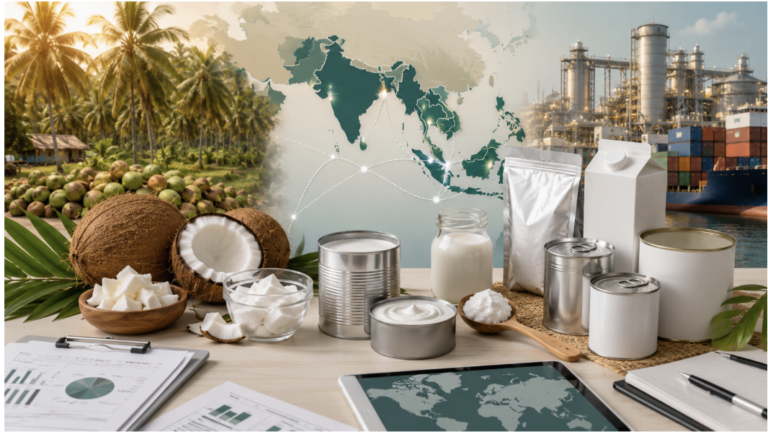
Canned coconut milk has evolved from a niche ethnic ingredient into a mainstream global staple. Today, it plays a critical role in international product development across multiple sectors. From ready meals and sauces to plant-based beverages and private label retail lines, canned coconut milk is now embedded in the supply chains of food manufacturers worldwide.
As demand for dairy alternatives and shelf-stable ingredients continues to rise, businesses require reliable partners that can deliver consistent quality, regulatory compliance, and scalable production. Thailand has firmly established itself as a leading supplier of canned coconut milk, serving global brands, manufacturers, and foodservice distributors.
For companies seeking long-term sourcing security, Thailand offers both agricultural strength and advanced manufacturing infrastructure.
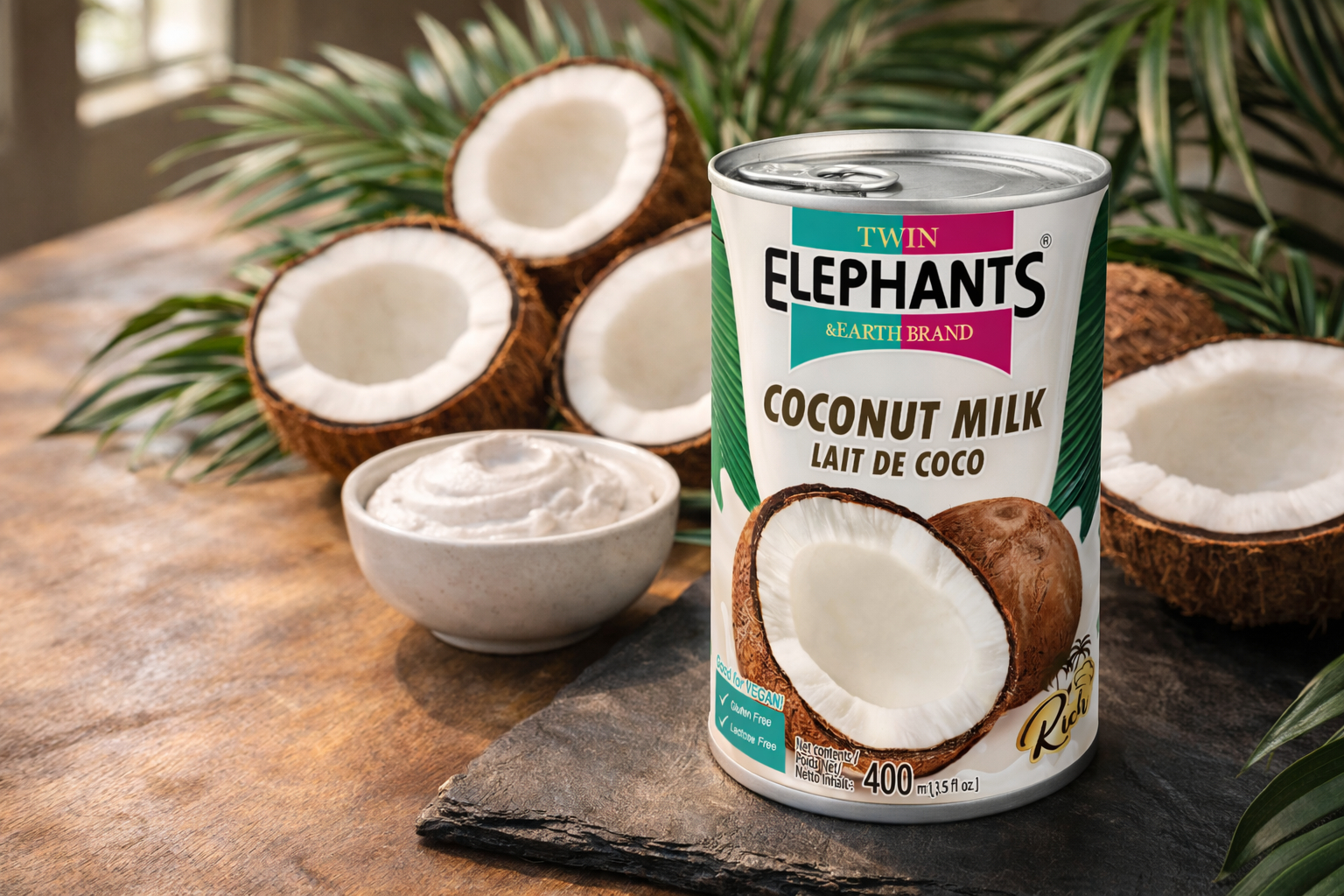
Erawan Food has supplied certified canned coconut milk to partners in over 50 countries since 1951. Our Twin Elephants & Earth brand — Thailand’s PM’s Export Award winner — is a recognized name in international retail and foodservice, and our OEM capabilities are built to support brands that want to grow under their own label.
Explore export-ready coconut milk solutions here:
https://erawanfood.com/product-categories/coconut-milk
What Defines Quality Canned Coconut Milk
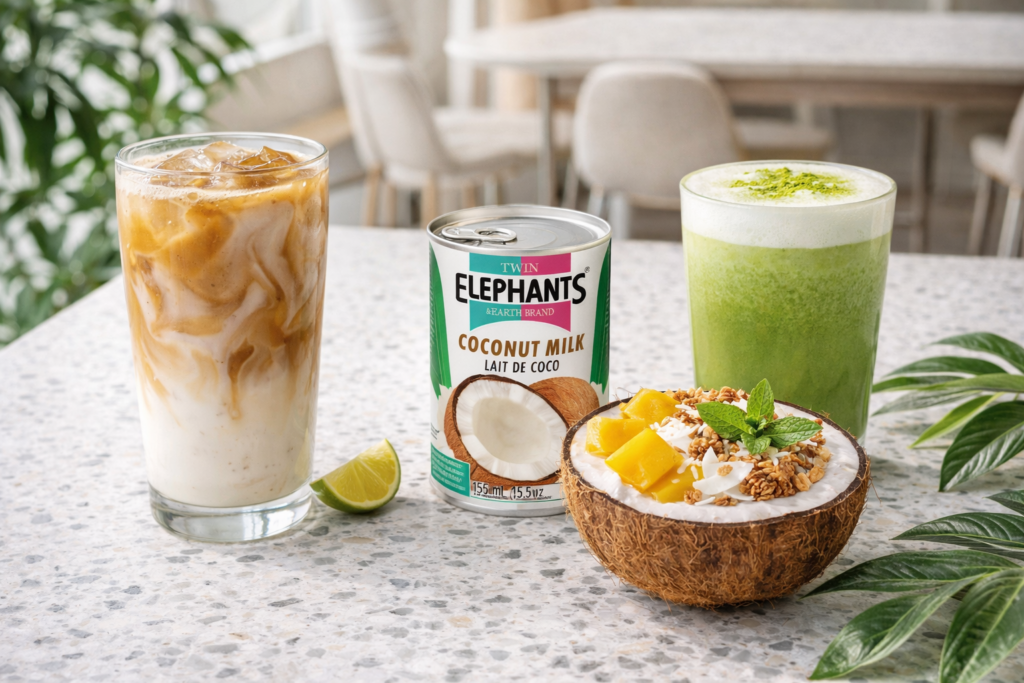
When sourcing canned coconut milk, quality must be evaluated beyond basic taste. For food brands and manufacturers, product performance directly affects formulation stability, consumer satisfaction, and regulatory approval.
Optimal Fat Content for Creaminess and Stability
One of the most important specifications in canned coconut milk is fat percentage. Standard commercial ranges typically include:
- 5 to 7 percent for lighter beverage formulations
- 17–19 percent fat for balanced creaminess suitable for cooking and retail
- 20–22 percent fat for richer applications such as curries, desserts and premium sauces
Higher fat content enhances mouthfeel, improves emulsification, and supports consistent performance in sauces and beverages. For product developers, stable fat ratios help maintain texture and prevent separation during storage.
Clean Label Formulation
Global markets increasingly demand transparency. High-quality canned coconut milk should contain minimal ingredients, ideally coconut extract and water, without artificial whiteners, preservatives, or flavor enhancers.
Clean label compliance is especially important for markets in the EU, US, Japan, and Australia, where ingredient scrutiny is strict. Brands prioritizing natural positioning rely on coconut milk that aligns with these regulatory and consumer expectations.
Batch-to-Batch Consistency
Consistency across production batches is essential for branded products. Whether used in ready-to-eat meals or beverage lines, coconut milk must maintain uniform color, viscosity, and flavor.
Reliable manufacturers implement strict quality control protocols to ensure stability and reproducibility at scale.
Thai Production Strengths in Canned Coconut Milk
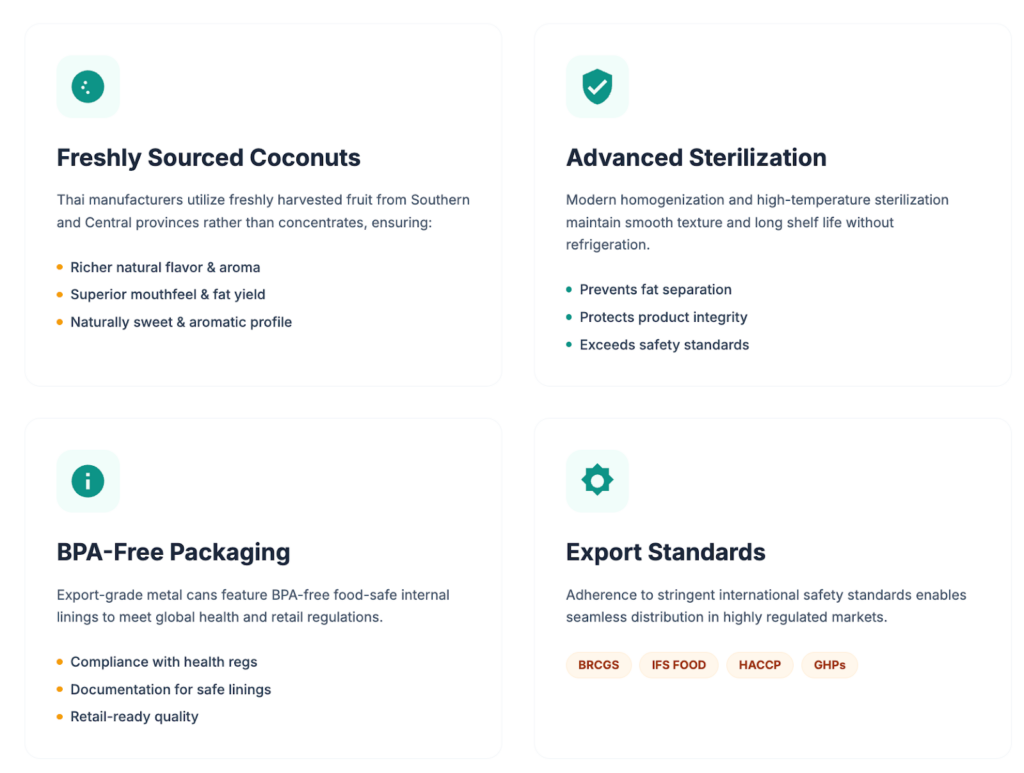
Thailand’s reputation as a global leader in canned coconut milk is built on both agricultural advantage and technical expertise.
Freshly Sourced Coconuts
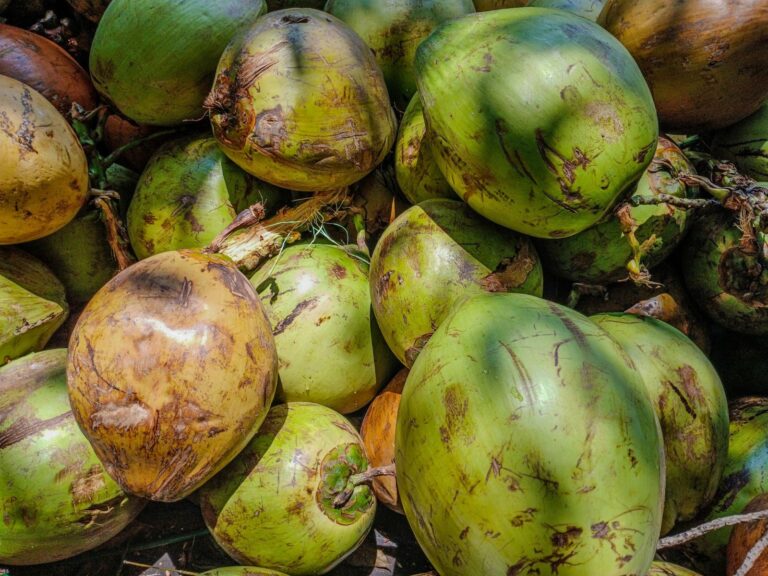
Thai manufacturers typically use freshly harvested coconuts rather than reconstituted concentrates. This results in:
- Richer natural flavor
- Better aroma
- Improved mouthfeel
- Higher natural fat yield
Southern and central provinces in Thailand are known for producing coconuts with naturally sweet and aromatic profiles. This agricultural strength translates directly into product quality.
Advanced Sterilization and Homogenization
To ensure long shelf life without refrigeration prior to opening, canned coconut milk undergoes high-temperature sterilization. Modern homogenization techniques help maintain a smooth texture and prevent fat separation.
These processes protect product integrity while meeting international food safety standards.
Export Standards and Packaging Options
Thailand’s canned coconut milk industry is export-focused. Leading manufacturers operate under globally recognized certifications, including:
- BRC
- IFS
- HACCP
- GHPs
- BSCI
- Thailand Trust Mark — awarded by Thailand’s Ministry of Commerce, guaranteeing product quality, environmental responsibility, and ethical production
These certifications ensure production environments meet stringent hygiene and food safety standards required by importers in regulated markets.
Flexible Packaging Formats
Canned coconut milk is available in multiple formats to support different business channels:
Retail: Common sizes include 250ml and 400ml cans for supermarkets and specialty stores. Private label programs allow retailers to develop house brands with customized labeling.
Foodservice: Large 2.9L cans are ideal for restaurants, hotel kitchens, and catering operations that require higher-volume usage.
Industrial: Drums or pouch packaging options support manufacturers producing sauces, soups, frozen meals, and ready-to-drink beverages.
Export-ready documentation, including ingredient declarations and compliance certificates, simplifies customs clearance and distributor onboarding. Flexible minimum order quantities also support both multinational buyers and emerging brands.
Application Versatility Across Industries
The adaptability of canned coconut milk contributes to its global popularity.
Retail Sector
Supermarkets and specialty grocers stock canned coconut milk under both branded and private label ranges. It supports Asian cuisine categories, organic lines, and plant-based sections.
Foodservice Industry
Restaurants, quick-serve chains, and hospitality groups rely on canned coconut milk for curries, soups, stews, and specialty beverages. Shelf stability simplifies storage and inventory management.
Beverage Manufacturing
Canned coconut milk serves as a base for smoothies, ready-to-drink beverages, dairy-free lattes, and plant-based milk alternatives. Its natural creaminess enhances texture while supporting clean label positioning.
Industrial Production
Food manufacturers use coconut milk in sauces, frozen meals, vegan desserts, and bakery fillings. Its consistent fat structure improves emulsification and flavor integration across formulations.
Why Thailand Remains a Preferred Source
Thailand’s combination of agricultural reliability, certified factories, advanced processing, and export readiness positions it as a dependable sourcing hub.
For global brands, the benefits include:
- Stable year-round coconut supply
- Proven regulatory compliance
- Scalable manufacturing capacity
- Flexible OEM and private label solutions
Since 1951, we’ve built sourcing relationships with coconut farming communities across Thailand’s southern and central provinces — the regions known for producing coconuts with naturally high fat yield and aromatic profiles. This isn’t just a country-of-origin advantage. It’s seven decades of knowing which harvests to prioritize, how to manage quality across seasons, and how to deliver consistency that branded products depend on.
For global procurement teams, that translates to:
- Supply predictability — long-standing supplier relationships buffer against seasonal volatility
- Formulation confidence — stable fat content and texture across batches, documented and verified
- Regulatory readiness — certifications and export documentation prepared as standard, not as an afterthought
- Scale with flexibility — production capacity for multinational buyers and MOQ flexibility for emerging brands alike
In competitive markets, selecting the right canned coconut milk supplier influences product performance, consumer trust, and long-term growth.
Thai canned coconut milk is more than a pantry staple. It is a strategic ingredient that supports global food innovation across retail, foodservice, beverage, and industrial sectors.
Businesses seeking to expand product lines, enter plant-based categories, or ensure export compliance benefit from partnering with certified Thai manufacturers.
Ready to Source Canned Coconut Milk at Scale?
Whether you’re formulating a new plant-based beverage, expanding a private label retail line, or securing a consistent bulk supply for foodservice operations — Erawan Food has the production depth, certifications, and OEM experience to support it.
Over 70 years. 50+ countries. Certified from farm to final packaging.
Explore our Coconut Milk Products at Erawan Food or contact us to discuss OEM, bulk orders, or distributor partnerships tailored to your region:
Contact Erawan Food
Email: [email protected]
Address: 88 All Erawan Building, Industrial Ring Road, Chongnonsee, Yannawa, Bangkok 10120, Thailand
Office Tel: +66 2 681 0251–59 Sales Team: +66 86 900 7777
Frequently Asked Questions
What makes Thai canned coconut milk different from other sources?
Thai canned coconut milk is known for its natural sweetness, high fat yield, and strict export-grade production standards.
What fat percentage is best for food manufacturing?
Most manufacturers prefer 17–19 percent for general use or 20–22 percent for richer applications such as desserts and sauces.
Is canned coconut milk suitable for plant-based beverages?
Yes. It is widely used in dairy-free drinks, smoothies, and vegan formulations due to its creamy texture and clean label potential.
Are Thai manufacturers certified for international export?
Leading producers hold certifications such as BSCI, BRC, IFS, HACCP, and GHPs to meet global regulatory requirements.
Can businesses request private label coconut milk?
Yes. OEM and private label options are available with customizable packaging, labeling, and fat content specifications.