Coconut Cream’s Essential Role in Modern Food Production
Coconut cream has become a cornerstone ingredient in modern food innovation. From indulgent desserts and savory curries to plant-based alternatives and clean-label sauces, its naturally rich texture and dairy-free profile make it highly desirable across global markets.
As the demand for vegan, ethnic, and premium foods continues to rise, food manufacturers and private labels are increasingly seeking high-quality coconut cream from trusted sources. In this guide, we break down the key factors to consider when selecting a coconut cream manufacturer with a spotlight on why Thailand is a top global supplier.
1. The Difference Between Coconut Milk and Coconut Cream
Understanding the difference between coconut milk and coconut cream is essential when sourcing ingredients for your products.
- Coconut Cream contains a higher fat content, typically around 20–22%, compared to 17–19% for standard coconut milk.
- It has a thicker, richer texture, making it suitable for recipes that require creaminess or a more concentrated coconut flavor.
- Coconut cream is less diluted and often contains less water, giving it a full-bodied mouthfeel ideal for desserts, sauces, and gourmet applications.
This distinction is crucial for both product formulation and consumer satisfaction, especially in high-end or plant-based offerings.
2. Key Quality Indicators When Choosing a Coconut Cream Manufacturer
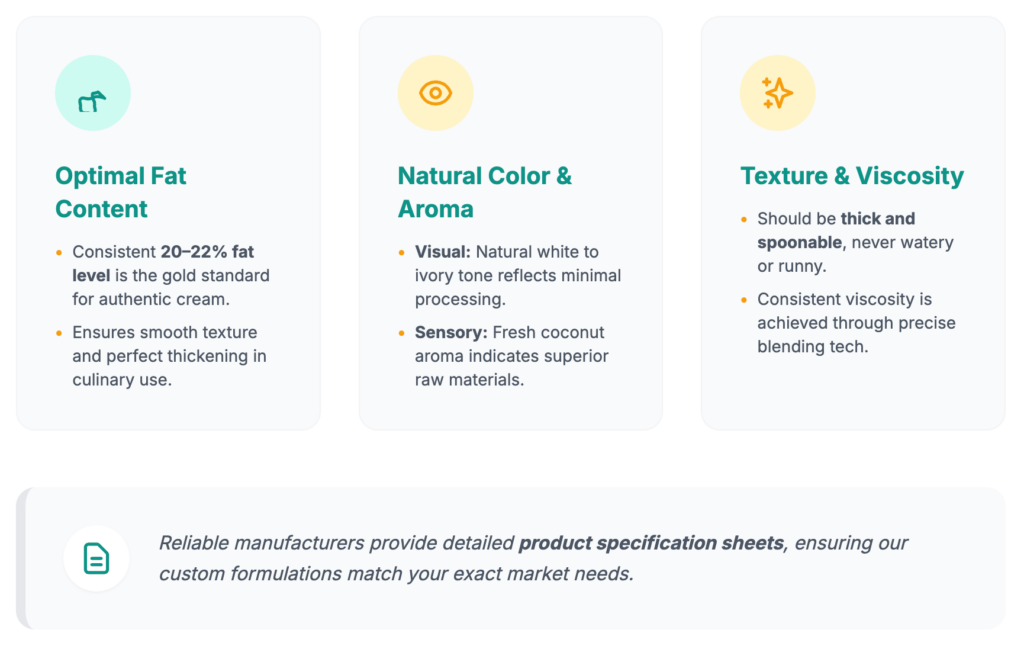
To ensure your coconut cream meets the expectations of your market, it’s important to evaluate several quality markers:
Fat Content:
- A consistent 20–22% fat level is standard for authentic coconut cream.
- This contributes to a smooth texture and proper thickening in cooking applications.
Color and Aroma:
- A natural white to ivory tone and a fresh coconut aroma indicate minimal processing and quality raw materials.
Viscosity:
- Coconut cream should be thick and spoonable, not watery or runny.
- Good manufacturers maintain texture consistency through precise blending and processing.
Reliable manufacturers will provide a product specification sheet detailing these parameters, allowing you to match your desired formulation.
3. Common Use Cases for Coconut Cream in Business Applications
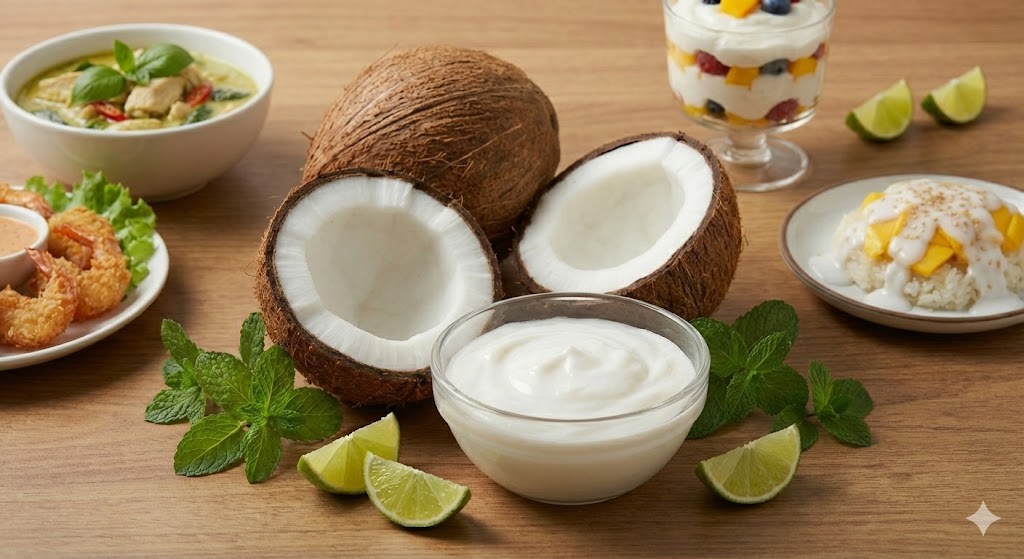
Coconut cream is prized in a wide variety of food categories. Its versatility makes it a must-have ingredient for:
A. Foodservice & Culinary Brands:
- Thai and Indian Curries: Adds depth and creaminess to traditional dishes.
- Soups and Stews: Enhances body and flavor.
- Coconut Milk based drink: Coconut Coffee, Asian style 3 colors drink with coconut milk, coconut yogurt drink
B. Plant-Based and Vegan Products:
- Dairy Alternatives: Used in vegan yogurts, cheeses, and ice creams.
- Non-Dairy Beverages: Blended into smoothies, lattes, or ready-to-drink vegan products.
C. Food Manufacturing & Industrial Use:
- Cooking Pastes and Sauces: Acts as a base ingredient for ethnic and fusion condiments.
- Bakery Fillings and Desserts: Provides richness in puddings, frostings, and custards.
The high-fat, creamy nature of coconut cream makes it a staple in health-conscious, allergen-free, and indulgent food formulations alike.
4. Why Thai Coconut Cream Is a Preferred Global Choice
Thailand is widely recognized as a leading coconut cream manufacturer due to its unique combination of agricultural resources and processing excellence.
High-Quality Raw Material:
- Thai coconuts are known for their natural sweetness, aromatic quality, and high-fat content—all essential for making premium coconut cream.
- Regions like Southern Thailand and Central Thailand are major coconut-growing provinces with consistent year-round harvests.
Advanced Production Standards:
- Thai manufacturers use modern extraction methods, including mechanical pressing and heat sterilization, to ensure food safety without compromising taste.
- Facilities often comply with global certifications like BRC, IFS, HACCP, and GHPs—assuring quality and export readiness.
Export Experience:
- Thailand has decades of experience in private label (OEM) and bulk export, serving food brands, supermarkets, and industrial buyers worldwide.
- Options for custom packaging, fat content specifications, and mixed container shipping make Thai suppliers ideal partners.
Whether you’re launching a new vegan product or need a reliable ingredient for large-scale food processing, sourcing coconut cream from Thailand offers both quality and scalability.
Choose the Right Coconut Cream Manufacturer for Your Business
Coconut cream is more than just a dairy alternative—it’s a high-value ingredient that impacts product taste, texture, and appeal. To deliver consistent results and meet evolving market demands, choosing a certified, experienced coconut cream manufacturer is essential.
Thailand remains one of the most trusted sources for coconut cream globally, offering exceptional raw materials, strict manufacturing standards, and flexible business models for OEM and wholesale buyers.
Looking to source high-fat, premium-quality coconut cream from a trusted supplier?
Explore our coconut cream options at:
https://erawanfood.com/product-categories/coconut-milk/
Get in touch to discuss:
- OEM/private label development
- Custom fat content or packaging formats
- Bulk shipping with flexible MOQs
Contact Erawan Food today to learn more.
Frequently Asked Questions (FAQ)
Q: What’s the difference between coconut cream and coconut milk?
A: Coconut cream has a higher fat content (around 20–22%) and thicker texture compared to standard coconut milk.
Q: What fat percentage is ideal for coconut cream?
A: A fat level between 20–22% is standard for full-fat coconut cream used in premium food applications.
Q: Is Thai coconut cream suitable for vegan or lactose-free products?
A: Yes. It’s 100% plant-based, making it ideal for vegan, paleo, and allergen-free formulations.
Q: Can I order coconut cream in custom packaging or formats?
A: Most Thai manufacturers, including Erawan Food, offer OEM services with customizable packaging, fat levels, and order volumes.
Q: Does coconut cream require refrigeration?
A: Unopened canned coconut cream can be stored at ambient temperature for 3 years. Once opened, it should be refrigerated and used within a few days.